
Double Glazing vs. Secondary Glazing: Which is Right for Your Scottish Home?
Choosing between a full window replacement and adding secondary glazing isn't just about price—it’s about the specific requirements of your property, your local planning laws, and your ultimate performance goals.
While double glazing is the standard for modern efficiency, secondary glazing is often the 'secret weapon' for noise reduction and heritage preservation.
Below, we break down the critical differences to help you decide."
Is Secondary Glazing as Good as Double Glazing?
The answer depends on what you are trying to fix.
If your main goal is thermal retention in a modern home, a full A-rated double-glazing replacement is the superior choice. It provides a complete thermal break and modern multi-point security.
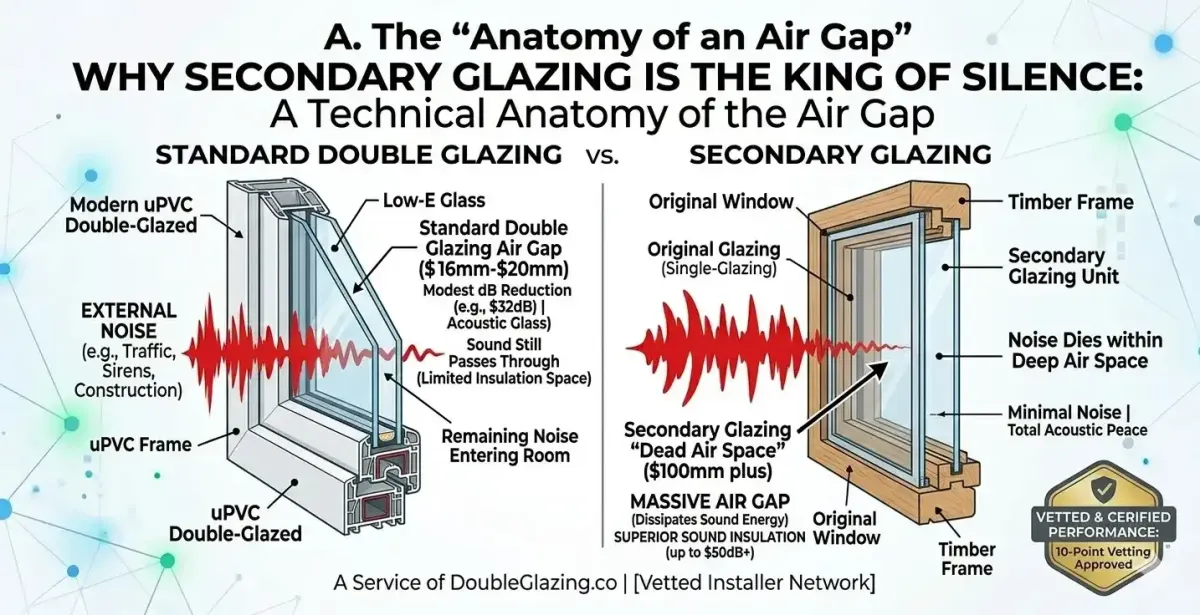
However, if your goal is acoustic insulation, secondary glazing is actually better than standard double glazing.
Because the two panes of glass are separated by a much larger air gap (often 100mm or more), it acts as a much more effective baffle for sound waves. For homeowners in noisy city centres or near flight paths, secondary glazing is frequently the preferred technical solution
The "Planning Permission" Peace of Mind
One of the biggest hurdles for Scottish homeowners in Edinburgh or Glasgow's West End is the local planning office.
Replacing original timber sashes with uPVC double glazing can lead to expensive enforcement notices if not approved.
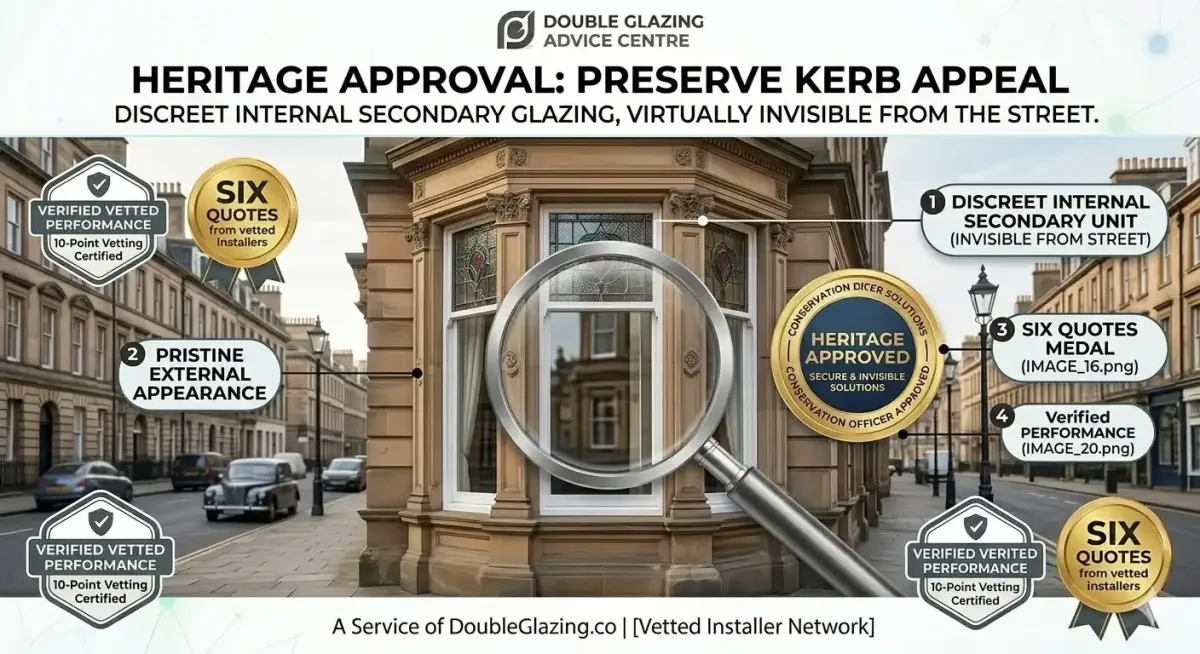
Secondary glazing bypasses this stress entirely. Because it is an internal alteration that doesn't change the 'face' of the building, it is widely accepted by heritage bodies and local councils as a non-destructive way to modernize a period property

At a Glance: Secondary Glazing vs Double Glazing Comparison Table
| Comparison | Double Glazing Full Replacement |
Secondary Glazing Internal Addition |
|---|---|---|
| Primary Benefit | Maximum Thermal Efficiency | Maximum Noise Reduction (up to 80%) |
| Property Type | Modern & Non-Listed Homes | Listed Buildings & Conservation Areas |
| Installation | Full removal of old frames | Fitted internally; original stays |
| Planning | Often required in historic zones | Rarely required (Heritage approved) |
| Typical Cost | Higher investment (£££) | More budget-friendly (££) |
| U-Value | 1.2 – 1.4 W/m²K (Excellent) |
1.7 – 1.9 W/m²K (Significant upgrade) |
Join over 5,000 Scottish homeowners who skipped the salesman and saved an average of 25% on their new windows.
Contact
Call - 0141 353 5064
DoubleGlazing.co is part of
The Double Glazing Advice Centre


Copyright © 2026. Double Glazing Advice Centre. All rights reserved.